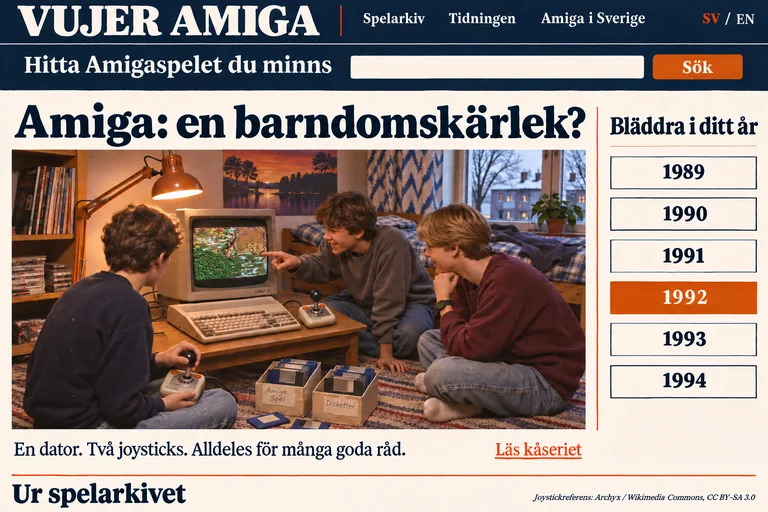
We all sat on the floor. Cross-legged, one foot tucked underneath us, or leaning against the bed. Someone had found a cushion. Someone else sat on his jumper and insisted it was perfectly comfortable, despite having already lost all feeling in his left leg.
It hardly mattered. Something was happening on the screen, and soon it might be your turn.
Between us stood the disk boxes, their lids folded back. One of us flicked through the labels while the others watched the game, offered advice and leaned closer whenever things got exciting. We all knew what the person with the joystick ought to do. Especially whoever had just failed at it himself.
“You need to jump earlier.”
Advice that could be applied to a surprising number of life's problems.
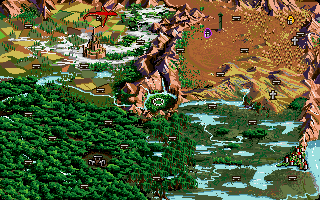
In Moonstone, we stayed put even when it was someone else's turn. We followed the knights across the map, pointing and debating where to go next. One mishap could send the whole floor into laughter. Then the next person took the joystick, solemnly convinced that now things would finally be done properly.
That conviction usually lasted a little while.
The disk boxes travelled between our homes. We held them close on the way over and put them carefully in the hall while taking off our shoes. Someone called from the bedroom.
“Did you bring the box?”
Of course you had. And something new was in there, somewhere behind the old favourites.
Game titles were written in ballpoint pen. Sometimes neatly, sometimes on an old label that still hinted at the disk's previous life. Someone had settled for “GAMES”. An ambitious approach to cataloguing, though its owner generally knew which one it was.
At least when he saw it.
We swapped boxes, borrowed and copied from one another. A new game had arrived through a cousin, a neighbour or someone in the next class. Its route was often a little unclear, but what mattered was that we now had all Saturday to investigate it.
The disk drive chattered and we waited. We talked about school, leafed through Datormagazin and reached for a glass someone ought to have placed further from the computer. When the screen asked for the next disk, everyone started looking. Naturally, it was at the bottom of the pile, where the person who had just organised everything had put it.
You could often understand a game just by watching for a while. Clear the gap. Win the race. Keep the ball in play. The joystick had one button that was expected to handle most things, and we were prepared to give it plenty of chances.
Beating the games was rarely simple. One level could occupy several afternoons and a considerable share of our conversations at school. When someone finally got through, we all cheered. We had watched every attempt, learnt every danger and offered more advice than the situation could reasonably require. The victory felt shared.
Outside, it grew dark. The lamp above the computer had been on so long nobody remembered who had switched it on. The smell of dinner drifted in from the kitchen, followed eventually by the call that meant the afternoon really did have an end.
“We're coming!”
We just had to finish this bit first.
The years passed. The Amiga was packed away and the disk boxes ended up in storage, changed hands or disappeared during a move. Our shoes grew bigger, our addresses changed, and finding a Saturday when everyone could come became harder and harder.
But sometimes a single screenshot is enough.
You recognise the colours on Moonstone's map and suddenly remember the rug, the lamp and the laughter of the person beside you.
That is the feeling we want to make room for at Vujer Amiga.
A place to find the game whose name you have forgotten, recognise its box and return to the review you pored over as a child. To turn back to your year and rediscover everything still tucked away somewhere in your memory.
Perhaps you send a link to someone you used to play with.
“Do you remember?”
And for a moment, the distance between you is as small as it was on the rug in front of the screen.
The lamp is on. The disk box is open. Someone arrives in the hall, and we shuffle over to make room.
There is time for one more go.
We were Amiga kids. The Amiga generation.